FR Clothing Sustainability Sourcing Criteria for Malaysia Procurement
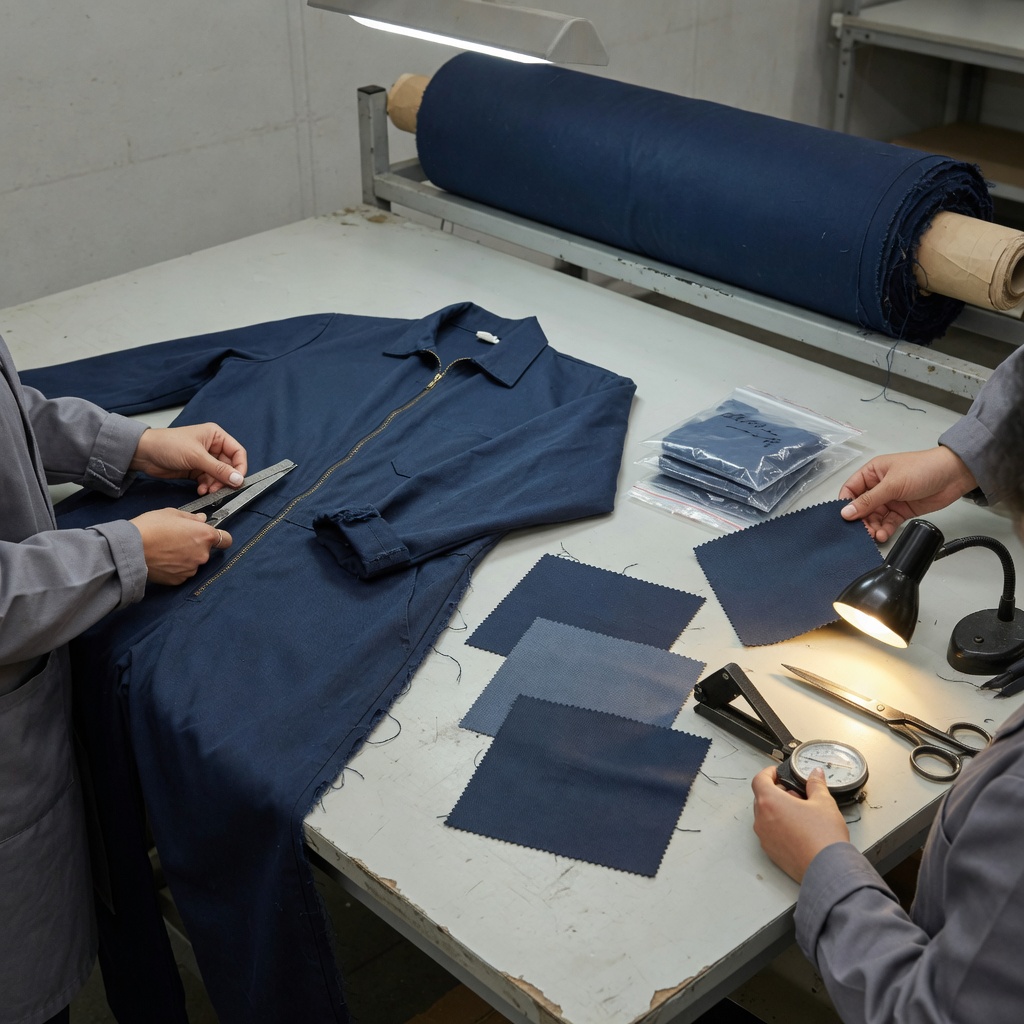
Sustainability sourcing criteria for FR clothing procurement in Malaysia
By Vincent Xi, Editorial Author Author profile
Malaysian B2B buyers specifying FR clothing should write sustainability sourcing criteria as RFQ fail points, not as catalogue copy. Do not rank price until the same article code carries a numerical cap on named hazardous flame retardants, lot-level chemical proof, and sewing-site traceability with labour evidence. Keep the plant’s existing FR performance method in a separate schedule so a chemical clause cannot waive a failed burn, heat or arc result.
This briefing stays inside FR clothing sourcing criteria you can paste into a Malaysia tender pack. It is not a full workwear manual and it does not assign a burn, heat or arc method.
The Swedish National Agency for Public Procurement core criterion for textiles where a flame-retardant function is requested sets listed substances—including PBB, octaBDE, TBPP, TEPA, TCEP and TDCPP—at a maximum of 10 mg/kg (milligrams of analyte per kilogram of textile; equivalent to 10 ppm by mass as a unit conversion, not a second limit) and names four verification routes: OEKO-TEX Standard 100, GOTS, bluesign APPROVED, or accredited laboratory analysis reports (Swedish National Agency for Public Procurement core criterion). Apparel chemical-management guidance tells suppliers to follow buyer MRSLs and RSLs such as ZDHC, operate a chemical-management system, substitute hazardous substances, and use independent textile testing such as OEKO-TEX (CBI, 9 tips on responsible chemical management). A published FR workwear manufacturer account describes labour, chain-of-custody and durability practices that industrial buyers request as ESG evidence types (LAPCO FR ethical, traceable FR workwear).
Those pages are specification sources. They are not a Malaysia statute and not a certificate held by any named factory in this briefing.
Decision path: specify the chemical cap and proof route → compare whether bidders accept those fields without exception codes → verify current documents against the quoted FR finish and sewing site → approve technically only when article codes match → order with a frozen process map and a first-bulk report hold.
Sustainability sourcing criteria to write into the FR clothing RFQ
Treat the fields below as award gates a supplier can fail. For this FR clothing buy, the minimum useful set is:
- Restricted-substance limit: each of the six flame-retardant analytes named on the cited Swedish core criterion page (count as-of the live page at RFQ date) shall remain at or below 10 mg/kg of textile, unless the buyer’s own RSL is stricter. Do not treat 10 mg/kg as a combined total across names unless the live criterion text says so; re-check that page before award.
- Proof type: one of the four routes named on that same page, covering the actual fabric, finish and article—not a generic mill poster.
- Chemical-management system: a documented MRSL/RSL (ZDHC is the example named by CBI) plus process evidence that chemicals in the FR finish and garment wet processes are inventoried, restricted and substituted where required.
- Traceability and labour: a supply-chain map from fibre or fabric through cut-make-trim, with labour-compliance evidence for the sewing location.
- Use-phase waste control: durability, repair and replacement-cycle data so ESG claims are tied to fewer discarded garments.
The list above is this briefing’s recommended award set, not a count published by the three sources. Recycled-fibre percentage and PFAS-related analyte lists are extras only if the Malaysia user already requires them. They do not replace the 10 mg/kg cap or the plant FR method.
Keep two files separate in the tender pack: (1) FR function and labelling as already used by the plant or EPC, and (2) chemical/ESG evidence. File (2) constrains how file (1) is chemically delivered. It does not score “green” points in place of a failed burn, heat or arc method the plant already requires.
Scoring rule (buyer evaluation, not a lab result): a lower-priced FR fabric or finish that cannot produce a current 10 mg/kg report on the named analytes is not equivalent to a higher-priced option that can. Price-only ranking hides chemical non-compliance.
Restricted flame retardants: 10 mg/kg and the six named analytes
CBI states that flame retardants reduce flammability but are generally toxic, endocrine-disruptive and carcinogenic, and that some are persistent and bioaccumulative (CBI chemical management guidance). That statement is CBI guidance, not a Malaysia legal finding. It is why some public buyers who still need FR function have written substance caps rather than a ban on FR clothing.
Use the Swedish core criterion as copy-paste specification language, then require the lab to identify each analyte as tested:
| Analyte as named on the criterion page | Buyer action in the RFQ |
|---|---|
| PBB | Report result in mg/kg; fail the lot if above 10 mg/kg |
| octaBDE | Same limit and unit |
| TBPP | Same limit and unit |
| TEPA | Same limit and unit |
| TCEP | Same limit and unit |
| TDCPP | Same limit and unit |
Data point 1. Limit: 10 mg/kg of textile. Scope: textiles where a flame-retardant function is requested, for the substances listed on the Swedish core criterion page. Unit: milligrams of restricted flame retardant per kilogram of textile. As-of: the criterion text on the cited page at the date the RFQ is issued; re-check the live page before award. Source: Swedish core criterion.
Data point 2. Six named restricted flame-retardant entries (PBB, octaBDE, TBPP, TEPA, TCEP, TDCPP). Scope: the “must not exceed” list on that same core criterion page. Unit: count of named substances/groups. As-of: the cited page at RFQ date. Source: same URL.
Example calculation (verify in the supplier quote and the accredited report, not as a legal limit by itself): a 1,000 kg fabric lot at 10 mg/kg implies a maximum of 10 g (10,000 mg) of any one listed analyte in that lot, because 10 mg/kg × 1,000 kg = 10,000 mg = 10 g. If the lab report uses a different sample basis (garment, print paste, finish bath), require the lab to state the basis and the detection limit in mg/kg.
Data point 3. Four named verification routes on the same criterion page: OEKO-TEX Standard 100, GOTS, bluesign APPROVED, or accredited laboratory analysis reports. Unit: count of acceptable proof types. Scope: core sustainability criterion for FR-function textiles. As-of: the cited page at RFQ date. Source: same URL.
If the report’s detection limit is above 10 mg/kg, the document cannot demonstrate the cap. Treat that as incomplete proof. This is a buyer verification rule derived from the cap; the criterion page sets 10 mg/kg, not a laboratory detection limit.
Distinguish a standard’s requirement from a supplier’s current document. OEKO-TEX Standard 100, GOTS and bluesign APPROVED are verification options in that public-procurement criterion. This article does not state that any factory, mill or Vanta Workwear article is certified. Accept only a current certificate or report whose scope includes the FR fabric, finish chemistry and garment components in the quote.
A certificate that covers greige cotton but not the FR finish can pass paper review while the restricted analyte sits in the finish. A lot-level accredited report is narrower and usually slower, but it matches the shipment you will receive in Malaysia. Score completeness of scope and recency (document date versus planned ship date), not the presence of a logo.
Chemical management versus a certificate screenshot
CBI’s apparel guidance tells suppliers to implement chemical-management systems, follow buyer MRSLs/RSLs such as ZDHC, replace hazardous substances, and obtain testing such as OEKO-TEX (CBI). Malaysian buyers can demand that same pack when the end user is a multinational, an ESG-reporting owner, or a public body using restricted-substance language. That is a documentation choice in the RFQ, not a claim that Malaysian law copies ZDHC.
Specify process evidence, not slogans:
- Chemical inventory for dye, finish, print, detergent and FR chemistry used on the quoted article.
- The MRSL/RSL version the mill is working to (name and version date; if ZDHC, the version on the quote).
- Incoming-chemical approval and a substitution log for any listed flame retardant.
- Wastewater and sludge controls if wet processing is in scope (buyer process-evidence field; these three sources are not a Malaysian effluent-law extract).
- Correlation table: mill chemical → garment bill of materials → lab report ID.
A mill with a mature MRSL system may refuse cheap, unspecified FR recipes and quote longer lead times. A trader with no mill control may offer short lead times and a scanned certificate from a different article. For FR clothing, the second option fails chemical and safety traceability at the same time.
Do not treat “PFAS-free” or “recycled content” as proven by the three sources above. If the Malaysia user requires either, write them as extra specification lines: recycled fibre percentage and position (shell, lining, sewing thread); PFAS-related analyte list and method; and a restatement that the plant FR performance method still applies. Label any percentage in the quote as a supplier declaration to verify with chain-of-custody documents, not as a finding of this briefing.
Labour, traceability, and durability evidence
A published FR workwear manufacturer describes in-house production in a privately owned Mexico facility, ethical labour, full supply-chain visibility, nearshore sourcing from the United States and Mexico to reduce freight emissions and waste, and garment durability that extends product life and reduces landfill waste for industrial ESG programmes (LAPCO FR). That is one company’s published operating model. It is not a Vanta Workwear capability statement, not a Malaysia origin claim, and not a measured emission factor in this article. The Mexico/United States geography is a manufacturing-origin disclosure on that page, not a sales-market target for this RFQ.
Extract the buyer-usable controls from that published account:
- Sewing location named, with whether cut-make-trim is in-house or subcontracted.
- Fibre-to-garment map (fibre/fabric mill, FR finish, trim, warehouse).
- Labour-compliance evidence for the named sewing site.
- Freight origin and mode on the Malaysia delivery term, so ESG and customs files match the quote.
- Durability: stated wash/wear cycle the supplier will stand behind, repair rules, and replacement policy.
Score these trade-offs:
- Visibility versus capacity. In-house or single-site production is easier to audit; multi-country subcontracting can be faster at peak demand and harder to prove.
- Lane length versus FOB price. The published nearshore example is a US–Mexico lane. A Malaysia delivery may use a different origin. Require origin, mode and packing details rather than copying another region’s “nearshore” claim.
- Durability versus unit price. A longer-life FR garment can reduce landfill and replacement purchases; it usually raises unit cost. Ask for a replacement-cycle assumption (for example, months in service) as a quote assumption to verify with the plant’s laundry and wear data, not as a test result in this briefing.
If a bidder cites another brand’s factory geography, treat it as origin disclosure. Do not treat manufacturing origin as a sales-market invitation and do not copy labour claims without documents covering the actual line that will cut the order.
Applying sustainability sourcing criteria in Malaysia FR clothing procurement
Keep the product decision primary: you are buying FR clothing for identified roles, then applying the chemical and ESG fields to that order. Do not turn the file into a country guide or a complete workwear manual.
Practical Malaysia-file steps that stay inside the evidence:
- Paste the chemical limit. Quote the 10 mg/kg cap and the six named analytes, and require results in mg/kg on the finished fabric or garment as defined in the RFQ.
- Name the proof. Select which of the four criterion routes you will accept, and whether a lot-level accredited report is mandatory for first bulk.
- Name the MRSL. If you want ZDHC-aligned management, write the version and the mill processes in scope (FR finish at minimum).
- Keep FR function in a separate schedule. Insert the performance method the Malaysia plant or its engineer already uses. This briefing does not assign that method.
- Ask for import-ready documents. Commercial invoice, packing list, fibre/finish declarations, test reports and certificates must identify the same article code. The sources do not provide a Malaysia customs HS ruling; do not invent one.
- Fail the lot in writing. State that any named analyte above 10 mg/kg is nonconforming; the lot shall not ship and shall not be replaced by a different untested article code.
- Hold first bulk. Technical approval is incomplete until the report ID matches the commercial invoice pack.
- Reject incomplete proof. A report that omits an analyte, uses a sample basis you did not define, or shows a detection limit above 10 mg/kg does not clear the cap.
- Do not add unsupported tropical-climate tests. Wash humidity, UV and sweat protocols belong only if the plant specification already names them. The three source pages do not publish a Malaysia climate method.
Accepting an incomplete chemical file to protect a short delivery window transfers restricted-substance risk into stores and into any later customer or lender ESG audit. Record that residual risk on the award recommendation if a bidder is still selected. Commercial approval shall not override a failed 10 mg/kg result.
Buyer decision table: specify, compare, verify, approve, order
| Buyer task | Specify in the RFQ | Compare bidders on | Verify before technical approval | Put on the purchase order |
|---|---|---|---|---|
| Restricted FR chemistry | Each of PBB, octaBDE, TBPP, TEPA, TCEP, TDCPP ≤ 10 mg/kg textile; report unit mg/kg; sample basis defined | Whether the quote accepts the cap without exception codes | Accredited report or in-scope OEKO-TEX Standard 100 / GOTS / bluesign APPROVED document matching the quoted fabric/finish | Article code + “10 mg/kg cap applies to each named FR analyte on bulk lots” |
| Lot nonconformance | Any named analyte above 10 mg/kg fails the lot; no silent article substitution | Willingness to reject and re-make versus requests to “use as is” | Report ID, sample basis, detection limit in mg/kg; DL must be able to show ≤10 mg/kg | “Nonconforming lots shall not ship” |
| Proof type | Which of the four criterion routes are accepted; certificate scope must include FR finish | Scope gaps (greige only vs finished article); document date vs planned ship date | Original file, unique report ID, lab accreditation, analyte list | “First bulk: lot report ID to match commercial invoice” |
| Chemical management | Named MRSL/RSL (ZDHC example per CBI) and inventory of FR/dye/finish chemicals | Presence of a mill system versus trader-only paperwork | Inventory sample, MRSL version, substitution record for listed FRs | Mill name and process site, not only trading office |
| Recycled fibre or PFAS-related extras | Only if the user requires them: % and position; analyte list; still meet plant FR method | Declarations that lack a method versus documents with a method | Chain-of-custody and lab method; reject unspecified “eco FR” | Extra clauses only where the user signed them |
| Traceability | Fibre/fabric mill, FR finish site, CMT site, trim sources | In-house map versus unnamed subcontractors | Process map that matches invoice origin | Origin and CMT site frozen unless a change control is approved |
| Labour | Evidence type accepted for the sewing site (audit/report as the buyer already uses) | Named factory versus labour claims with no site | Document date, site address, findings closure | Sewing site address on PO |
| Durability / waste | Requested service life assumption, repair path, defective-garment return | Unit price alone versus life-cycle replacement count | Align assumption with plant laundry; treat months-in-service as a quote assumption | Warranty/repair line if agreed |
| Logistics to Malaysia | Delivery term, origin port/plant, mode, piece count and carton standard | FOB price versus documented origin and mode | Origin on documents equals quote; no silent transhipment change | Origin, mode, article quantity, report pack as a shipping document |
| FR function (safety file) | Plant method already in force; sustainability file cannot waive it | Chemical “pass” that still fails the plant FR method | Independent of the 10 mg/kg report | Safety schedule referenced by article code |
Practical RFQ checklist
Use this list to specify, compare, verify, approve or order FR clothing—not as a marketing scorecard.
- Article definition. State garment type (for example coverall, shirt, trouser), size run, fabric mass as quoted (g/m² as a supplier figure to verify), colour and any high-visibility components, with a numbered tech pack.
- FR function schedule. Attach the Malaysia plant or engineer method already used. Do not let a sustainability annex replace it.
- 10 mg/kg cap. Write that PBB, octaBDE, TBPP, TEPA, TCEP and TDCPP shall each be ≤ 10 mg/kg of textile on the defined sample basis (Swedish core criterion).
- Lot fail rule. Any named analyte above 10 mg/kg is nonconforming; the lot shall not ship and shall not be swapped for a different untested article code.
- Analyte identification. Require the lab name, method, detection limit (mg/kg) and CAS/name mapping for each acronym. Fail the file if detection limit is above 10 mg/kg.
- Proof route. Tick which of the four routes you will accept and whether first-bulk lot analysis is mandatory even when a certificate exists.
- Certificate scope check. If OEKO-TEX Standard 100, GOTS or bluesign APPROVED is offered, require the current document, product class/scope and confirmation that the FR finish and trims are inside scope. No implied certification in this briefing. If the document date will lapse before shipment, require a replacement document before despatch.
- MRSL/RSL. Name the buyer list (ZDHC is the example in the CBI guidance) and version date; require a mill chemical inventory for the quoted article (CBI).
- Substitution record. If a listed flame retardant was used historically, require the replacement chemistry name and a new mg/kg report.
- Process map. Fibre or polymer → fabric → FR finish → CMT → warehouse, with legal names and addresses.
- Labour evidence. Sewing-site document the buyer will accept; reject labour claims that do not name the site.
- Durability assumption. Supplier’s stated wear/laundry cycle, repair offer and defective-return rule, marked as a quote assumption aligned to plant practice (published FR manufacturer durability/ESG framing).
- Optional extras. Recycled content % and position; PFAS-related analytes only if the user requires them; each must still pass the FR function schedule.
- Malaysia delivery documents. Invoice, packing list, origin, mode, article codes matching test reports; quantity and carton count on the PO.
- Counter-sample retain. Require a sealed cutting from the same lot as the accredited report to be held until the Malaysia plant accepts the shipment (buyer process field; the sources do not set a legal retention period).
- Change control. Finish mill, FR recipe, CMT site or certificate version cannot change after approval without a new chemical report.
- Award gate. Technical approval requires matching article codes across quote, report and PO, plus first-bulk report-ID hold; commercial approval cannot override a failed 10 mg/kg result.
How this briefing was derived, and what to verify before award
Author attribution. Visible byline and Article JSON-LD author: Person Vincent Xi, job title Editorial Author, URL https://www.vantaworkwear.com/authors/vincent-xi/. No factory-visit, wear-trial, laboratory, award, client or first-person experience claim is included.
Source contexts. (1) Swedish National Agency for Public Procurement core sustainability criterion for flame retardants in textiles where flame-retardant function is requested—used here as public specification language for restricted substances and verification routes. (2) CBI guidance on responsible chemical management in apparel—used for MRSL/RSL, ZDHC, substitution and independent testing expectations. (3) A published FR workwear manufacturer page on ethical labour, traceability, freight-lane choice and durability—used only as an example of evidence types industrial buyers request, not as a capability of any other company.
Methodology. Editorial comparison of those three public pages. Numerical values in this briefing are limited to 10 mg/kg, the six named analytes, the four verification routes, and the labelled 1,000 kg → 10 g example calculation. No laboratory was commissioned for this page.
Limitations / what to verify. The Swedish criterion is a public-procurement tool, not automatically Malaysian law. CBI guidance is written around apparel chemical control for demanding import markets; using it in a Malaysia RFQ is a buyer choice. The LAPCO page describes that manufacturer’s own model (including Mexico/US geography) and does not measure a Malaysia freight emission factor. None of the three pages provides a Malaysia-specific FR regulation, tropical-climate wash method, customs ruling, price, lead time, or certification status for Vanta Workwear. Recycled-content and PFAS-free claims are not evidenced in those excerpts and must be specified and tested if required. Before award, confirm the live criterion text, the current MRSL version, certificate scope versus the actual FR finish, detection limit versus the 10 mg/kg cap, lot IDs versus the commercial invoice, and the plant FR performance method on the same article that will be ordered.
Discuss Your Requirements
Review our manufacturing capabilities, then share your specifications for a supplier-fit review.