Work Pant OEM Sustainability Sourcing Criteria for New Zealand Manufacturing RFQs
By Vincent Xi, Editorial Author Job title: Editorial Author · Vanta Workwear (vantaworkwear.com)
```json { "@context": "https://schema.org", "@type": "Article", "headline": "Work Pant OEM Sustainability Sourcing Criteria for New Zealand Manufacturing RFQs", "author": { "@type": "Person", "name": "Vincent Xi", "jobTitle": "Editorial Author", "url": "https://www.vantaworkwear.com/authors/vincent-xi/" } } ```
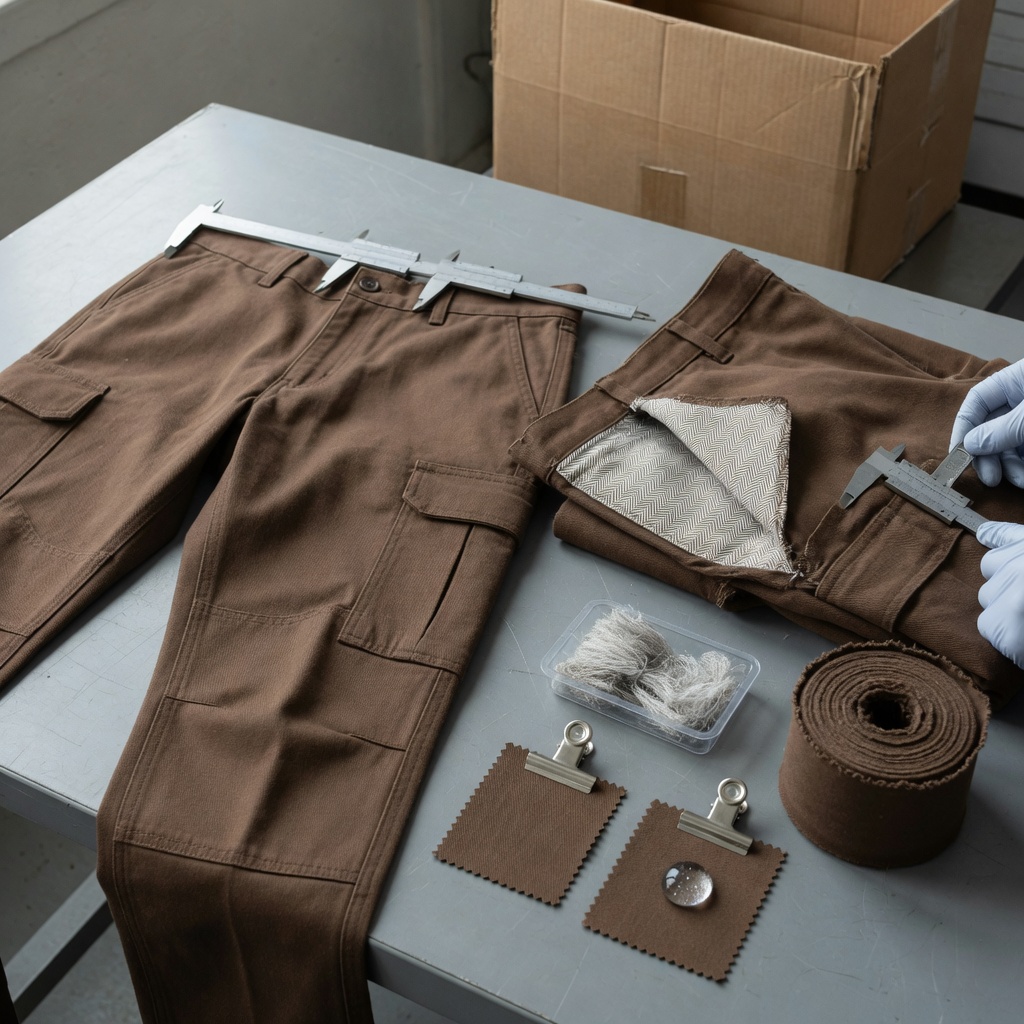
The work pant OEM sustainability sourcing criteria that should decide a New Zealand manufacturing award are lot-level documents and test gates, not catalogue adjectives. Write fibre mass, Transaction Certificates, PFAS-free chemistry, industrial-laundry durability, multi-tier labour evidence, and circularity the factory can actually operate as fail conditions before anyone releases a bulk purchase order. A New Zealand importer still needs one style, one colour, one fabric lot, and one document pack that match after the container arrives.
Score work pants manufacturing quotes on that same style. A mill scope certificate without a Transaction Certificate commitment, a PFAS-free claim without a finish safety data sheet, or take-back without a named party for New Zealand reverse freight is a failed bid, not a verbal promise.
Ethical-uniform procurement guidance aimed at 2026 programmes treats all-tier codes of conduct, modern slavery statements, risk assessments, fibre composition data, certifications, and circularity measures such as repair pathways and take-back as expected evidence (JSD, ethical uniform supplier expectations for 2026). Workwear definitions classify sustainable work pants by organic or recycled raw materials, lower-impact processing, ethical labour, and end-of-life recyclability, and list OCS, GOTS, GRS, RCS, and OEKO-TEX Made in Green as commonly used verification tools (workwear.org, workwear and sustainability). Fabric-side guidance states that mills issue GRS and OCS Transaction Certificates for recycled polyester and organic cotton, and that specifications should define recycled-content percentages, fluorine-free PFAS-free water-repellent finishes, and industrial-laundry durability (ripstopfabric.com, sustainable workwear fabrics).
This briefing is published under the Editorial Author byline of Vincent Xi. The public author listing is the only approved experience basis. This page does not claim mill visits, laboratory tests, named customers, awards, publisher-held certifications, or first-person production experience.
Sustainability sourcing criteria that belong in the OEM contract
Write sustainability sourcing criteria as contract clauses. For OEM work pants, lock the six items below into the RFQ. If a line returns "not offered," score that claim as a fail.
- Fibre and mass. Fibre types and percentages by mass for shell, pocketing, waistband, sewing thread, and knee reinforcement. If a recycled or organic claim will be used in New Zealand, state whether it is fabric-level or garment-level.
- Chain-of-custody document. Name GRS or RCS for recycled content, OCS or GOTS for organic cotton, the claimed percentage, and that a Transaction Certificate is due for each bulk fabric lot.
- Chemistry. If durable water-repellency is required, specify fluorine-free / no intentionally added PFAS, plus a mill declaration and safety data sheet for the finish system (ripstopfabric.com, sustainable workwear fabrics).
- Use-phase durability. Name the industrial laundry method, cycle count, temperature in °C, and acceptance limits for dimensional change, colour, and bartack failure.
- Labour and governance. Code of conduct covering named tiers, a dated modern slavery or forced-labour statement, and a risk assessment for the actual cut-make-trim and dyehouse sites (JSD, ethical uniform supplier expectations for 2026).
- Circularity. Spare-part SKUs, a repair pathway, and—if take-back is claimed—who pays reverse freight involving New Zealand (JSD, ethical uniform supplier expectations for 2026; workwear.org, workwear and sustainability).
Lot-level traceability and laundry gates add pre-production time. They reduce the risk of a bulk lot that cannot support a claim already made to a New Zealand client or a parent-company ESG file.
Example BOM (assumption to verify in the mill quote, not a tested result; no laboratory as-of date): shell 245 g/m² cotton-rich twill (fabric mass per square metre), 150 cm usable width; 65% polyester / 35% cotton by mass, with 20 percentage points of fabric mass as GRS-certified recycled polyester. Do not assume pocketing and thread sit on the same Transaction Certificate chain.
Work pants manufacturing evidence: certifications and Transaction Certificates
A mill scope certificate in a showroom is not a Transaction Certificate for the rolls on the cutting table. In work pants manufacturing, the claim fails when that document names a different product, period, or site than the shipment.
Distinguish each standard’s designed scope from any OEM’s marketing. The instruments below are the ones commonly listed for sustainable workwear attributes, including work pants (workwear.org, workwear and sustainability). Fabric suppliers issue GRS and OCS Transaction Certificates for recycled polyester and organic cotton (ripstopfabric.com, sustainable workwear fabrics). This table is an editorial risk-control summary, not a certificate and not this company’s practice.
| Instrument | Designed to evidence | Does not automatically evidence |
|---|---|---|
| GRS | Recycled content and chain of custody for certified material, plus the social/environmental facility criteria in that standard | Garment durability, PFAS-free chemistry, or New Zealand legal compliance |
| RCS | Recycled content and chain of custody | The broader GRS social/chemical package |
| OCS | Organic fibre content and chain of custody | Full wet-processing chemistry or social criteria (GOTS-type scope) |
| GOTS | Organic fibre plus processing and social criteria within GOTS | Recycled polyester content (use GRS/RCS) |
| OEKO-TEX Made in Green | A labelled pathway combining tested substances and audited production under that scheme | Recycled or organic content unless separately certified |
Verification rule: Transaction Certificate seller, buyer, product, mass, and lot identifiers must reconcile with the commercial invoice and packing list. A scope certificate shows a site can sell certified goods; a Transaction Certificate shows a given shipment was sold as certified. Require both if a certified-content claim will be printed.
Uncertified pocketing, cord, or thread can kill a garment-level claim even when the shell is certified. Decide in the RFQ whether you need a garment-level claim or a cheaper, still-auditable shell-fabric claim. Do not treat a quoted certification as current without a document covering the production window. This page does not assert that any manufacturer, including the publisher, holds these certifications.
Recycled content, PFAS-free finishes, and industrial-laundry durability
Most work pants manufacturing failures show up at seams, pocket corners, waistbands, shade, and water-repellency. Specify chemistry and laundry so a pre-production garment can be rejected before bulk cutting. Fabric-side guidance already tells buyers to define recycled-content percentages, fluorine-free PFAS-free water-repellent finishes, and industrial-laundry durability (ripstopfabric.com, sustainable workwear fabrics).
Recycled content. State percentage, polymer (usually recycled PET), claim level (fibre, fabric, or garment), and standard (GRS or RCS). The Transaction Certificate percentage must equal or exceed the claim. Ask the mill, in the quote, whether the quoted recycled polyester changes dye uptake or pilling versus the virgin PET baseline on this construction. File the answer as a pre-production risk note; it does not replace documents.
Organic cotton. Use OCS for content tracking; use GOTS when the GOTS processing and social scope is also required (workwear.org, workwear and sustainability). Shrinkage and shade must still pass the laundry gate.
PFAS-free DWR. Specify no intentionally added PFAS and fluorine-free chemistry when a finish is required (ripstopfabric.com, sustainable workwear fabrics). Ask for finish-system identity, SDS, and a mill declaration that the finish is fluorine-free. Catalogue spray data is not evidence that the finish survives industrial wash and hot-dry cycles. If the New Zealand end user is laundry-managed, re-test after the wash count that laundry actually uses.
Industrial laundry. Specifications should define industrial-laundry durability. A fabric source also states that sustainable fibres can perform equivalently to conventional materials in work-pant constructions (ripstopfabric.com, sustainable workwear fabrics). Treat "equivalently" as a hypothesis to prove on the buyer’s cycle, not as a result. Name the method the New Zealand laundry contractor uses. If that contractor uses an industrial workwear protocol such as ISO 15797 (example method name only, where thermal disinfection or tunnel finishing is used), write that method, the temperature in °C, and the cycle count into the RFQ. That is a test-method requirement the buyer may impose; it is not this company’s practice or a product certification.
Example acceptance band (assumption to agree with the laundry contractor and OEM; not a laboratory report; no test as-of date): 25 industrial wash cycles at the temperature the New Zealand laundry uses (state °C); dimensional change at waist and inseam within ±3% of the pre-wash measurement; no open bartacks at pocket corners; if DWR is specified, record spray rating before wash and after 25 cycles.
Higher GSM and denser bartack maps raise fabric mass and CMT minutes. They can also add wash life, which is the circularity lever that does not depend on a take-back truck. Treat that trade-off as quote data to compare, not as a tested outcome on this page.
Labour due diligence and multi-tier governance
Fibre certificates do not evidence wages, hours, or recruitment fees. Guidance aimed at 2026 ethical-uniform programmes asks procurement teams for labour standards, traceable sourcing, and programme governance. That evidence set includes supplier codes of conduct covering all tiers, modern slavery statements, risk assessments, fibre composition data, certifications, and circularity, discussed alongside CSRD, ESPR, and UK Modern Slavery Act-type obligations for organisations that fall under those regimes (JSD, ethical uniform supplier expectations for 2026).
For a New Zealand buyer those EU/UK instruments are not automatically New Zealand law. They still matter when the buyer is a reporting-group subsidiary or already copies that evidence set in board policy. Keep the RFQ to documents:
- Code of conduct naming Tier 1 (CMT), Tier 2 (fabric mill/dyehouse), and certified input sources where recycled or organic claims exist.
- Modern slavery or forced-labour statement for the OEM legal entity, with date and named manager.
- Risk assessment for the actual production country and processes, not a generic regional statement.
- Social-audit report: scheme, site, date, announced or unannounced, open corrective actions. An expired audit is a fail.
- Subcontractor clause: no unauthorised sewing or embroidery. Logo work on work pants is a common subcontracted step; the embroidery or print site belongs in the same file.
Mapped dyehouses and embroidery sites will eliminate some low quotes. Unmapped subcontracting is how labour and chemical claims break together. This article does not interpret New Zealand statute and does not rate any factory.
Circularity and end-of-life evidence for OEM work pants
Sustainable workwear definitions include end-of-life recyclability (workwear.org, workwear and sustainability). Ethical-uniform procurement guidance names repair pathways and take-back programmes as circularity measures (JSD, ethical uniform supplier expectations for 2026).
Convert those headings into OEM mechanics:
- Repair: replaceable zips, spare buttons, documented stitch types, knee-panel patterns, and spare-part SKUs priced on the same Incoterm as the garment.
- Disassembly: metal trims versus welded logos; cotton-rich shells versus inseparable laminates. Ask the OEM and any named offtaker whether a cotton-polyester blend can enter a fibre-to-fibre route. Using the example 65% polyester / 35% cotton shell above (assumption to verify in the mill quote), that blend is a different recycling feedstock from a mono-material pant. Do not accept "100% recyclable" unless the OEM names the route and offtaker.
- Take-back: who is importer of record if used garments return to or leave New Zealand? Used garments can raise different customs, biosecurity, and waste-handling questions than new apparel. Require a named facility and a named party who will verify those rules with the importer’s broker. This page does not interpret those rules.
- Laundry life: for fleet pants, extra industrial cycles before replacement usually outweigh an unfunded recycling claim—if the laundry gate is actually tested.
Take-back without a New Zealand reverse-logistics owner becomes warehouse dead stock. Repair without spare zips is a slogan. Prefer a priced spare-parts line on the first purchase order.
New Zealand documentation, freight, and claim-control for OEM work pants
Keep the product decision on the work pant. The New Zealand layer is how freight, documents, and public claims stay aligned after manufacturing.
Shipment file (agree with the importer’s broker): commercial invoice, packing list, bill of lading or air waybill, carton count and gross/net kg, fibre composition, country of origin, and—if a certified-content claim is used—Transaction Certificates for the fabric lots in that container. HS classification, duty, and GST must be confirmed against current New Zealand rules; this page does not publish a duty rate or a GST ruling.
Example document-control rule (process assumption to verify with broker and OEM; not a carrier or customs ruling): one GRS or OCS Transaction Certificate per fabric lot; invoice and packing list repeat style code, colour, fabric lot, and piece count; labelled fibre composition matches the invoice. If they diverge, stop the claim before goods are advertised in New Zealand.
Freight: specify the mode and Incoterm rather than assuming them. For bulk OEM work pants, sea freight is the usual quote basis (example commercial pattern to confirm in the RFQ, not a measured share). Example Incoterms to price: FOB load port, CIF Auckland, or DDP distribution centre. Specify carton protection and flat-pack versus hanging. Air freight is a sampling tool, not a sustainability claim. Domestic New Zealand cartage from port to laundry or warehouse is the buyer’s unless DDP includes it.
Labels and tenders: composition and care labels must match the approved spec. Recycled or organic percentages on a New Zealand website or tender must not exceed the Transaction Certificate chain. Have New Zealand counsel review fair-trading and advertising-standards risk; this article is not legal advice.
If the New Zealand entity reports into a group using CSRD/ESPR-style due-diligence templates, collect the fibre, chemical, and labour pack at purchase-order stage rather than reconstructing it after shipment (JSD, ethical uniform supplier expectations for 2026).
Buyer decision table: specify, compare, verify, approve, order
Use one row-set per OEM quote on the same work-pant style. Award the New Zealand manufacturing order only when every claimed row can be verified before bulk cutting.
| Decision row | Specify in the RFQ | Compare across quotes | Verify before bulk | Approve / order gate |
|---|---|---|---|---|
| Fibre claim | Fibre % by mass for shell, pocketing, thread; recycled/organic % and standard | Fabric-level vs garment-level; trim exceptions | Transaction Certificate product, %, seller/buyer, lot vs invoice | No bulk cut until Transaction Certificate template is accepted |
| Chain of custody | GRS, RCS, OCS, or GOTS named; Transaction Certificate per lot; remaining-mass method | Scope certificate vs Transaction Certificate; certified stages | Roll lot numbers, cutting records, remaining-mass log | Payment milestone held until lot-matched Transaction Certificates arrive |
| DWR / PFAS | Fluorine-free; no intentionally added PFAS if a finish is specified | SDS and mill-declaration completeness | Finish on bulk fabric, not only the lab-dip | Reject lots finished with a different chemistry |
| Industrial laundry | Method, °C, cycle count, dimensional ±%, bartack integrity | Mill test vs third-party vs "equivalent to" | Pre-production garment from bulk fabric | PP approval includes wash measurements |
| Construction | GSM (g/m²), seam type, bartack map, pocket-bag fibre | Fabric consumption and CMT vs stress points | Size-set measurements after wash | Size-set sign-off before bulk |
| Labour | All-tier code of conduct; modern slavery statement; audit date/scope | Audit age, open CAPs, subcontracting clause | Sewing-site address matches the PO | No unauthorised embroidery or sewing sites |
| Circularity | Spare-parts list; repair; take-back owner and Incoterm | Priced spares vs "on request" | Written process and who pays New Zealand reverse freight | Put spares on the first PO if repair is claimed |
| Claim language | Freeze recycled/organic % and claim level for New Zealand tenders, websites, and hangtags | Quote % vs Transaction Certificate %; on-product vs B2B-only | Labels, hangtags, and invoice fibre line | Do not publish a % above that PO’s Transaction Certificate chain |
| NZ shipment pack | Invoice, packing list, origin, fibre, carton kg, dye lot, Transaction Certificate copies | Who prepares documents; Incoterm vs local cartage | Pre-alert pack 5 working days before vessel cut-off (example timing to agree) | Do not advertise claims until documents match labels |
RFQ checklist for work pant OEM sustainability sourcing criteria
Each line must return a document, a number with unit, or "not offered." Treat "not offered" as a fail for that claim.
- Quote the cargo or industrial work pant against a measurement chart in centimetres (waist, inseam, rise, thigh, leg opening).
- State shell fabric in g/m² and fibre % by mass. Example assumption to confirm in the mill quote: 245 g/m², 150 cm usable width, 65% polyester / 35% cotton by mass.
- If recycled content is offered, state recycled polyester % by fabric mass and fabric-level vs garment-level claim. Example assumption to verify: 20% recycled polyester by fabric mass on a GRS Transaction Certificate.
- Name GRS, RCS, OCS, or GOTS; attach a current scope certificate covering the production window; commit to a Transaction Certificate per bulk fabric lot.
- List pocketing, waistband, thread, zip tape, and labels with fibre content; flag trims that break a garment-level certified claim.
- Describe certified-roll segregation and a remaining-mass / cutting-report method so Transaction Certificate mass and cut mass can be reconciled (OEM proposes the method and units).
- If water-repellency is specified, declare fluorine-free / no intentionally added PFAS; attach SDS and mill declaration.
- Name industrial laundry method, temperature in °C, and cycle count; report waist and inseam dimensional change in %. Example gate to negotiate with the laundry contractor: 25 cycles, ±3% of the pre-wash measurement.
- Attach a bartack and stress-point map; commit that bulk matches the pre-production wash sample cut from bulk fabric.
- Provide an all-tier code of conduct, a dated modern slavery or forced-labour statement, and the latest social-audit report with corrective-action status.
- Name the cut-make-trim site and any embroidery or print subcontractor; contractually prohibit unauthorised subcontracting.
- Price spare zips, buttons, and knee panels as separate SKUs on the same Incoterm as the garment.
- State whether take-back or repair is offered; if yes, name the facility and who handles New Zealand reverse freight and used-textile compliance checks with the broker.
- Pack invoice, packing list, origin, fibre composition, dye lot, carton gross/net kg, and Transaction Certificate copies aligned to lot numbers.
- State Incoterm, port, and whether New Zealand domestic cartage is included; do not present duty or GST as a customs ruling.
- Confirm that any recycled or organic percentage used in New Zealand tenders, websites, or hangtags will not exceed that PO’s Transaction Certificate chain; state whether the claim is on-product or B2B-documents only.
- Give lab-dip, size-set, PP, bulk, Transaction Certificate issuance, and FOB or ex-works dates as calendar days from PO (OEM inserts the numbers; they are quote data, not estimates from this article).
- Confirm a sealed bulk-fabric swatch and a PP garment are retained against the New Zealand purchase order (retention period as agreed in the quote).
- Name the person who signs the sustainability pack (name, title, email) as the New Zealand buyer’s audit counterpart.
How this briefing was derived, and what to verify
Source contexts. (1) A 2026-oriented article on ethical-uniform procurement evidence: all-tier codes of conduct, modern slavery statements, risk assessments, fibre data, certifications, and circularity, discussed alongside CSRD, ESPR, and UK Modern Slavery Act-type obligations (JSD). (2) A workwear sustainability overview defining sustainable work pants via organic/recycled inputs, processing, labour, and end-of-life, and listing OCS, GOTS, GRS, RCS, and OEKO-TEX Made in Green (workwear.org). (3) A sustainable workwear fabrics note on GRS/OCS Transaction Certificates, recycled-content percentages, PFAS-free finishes, and industrial-laundry durability (ripstopfabric.com).
Methodology. The criteria are an editorial synthesis of those three public pages, mapped to a New Zealand OEM purchase-order workflow: specify, compare quotes, verify lots, approve pre-production, then order. Research-source evidence supports factual editorial claims only; it is not keyword-demand evidence. No factory, mill, or laundry was audited for this page. Percentages, GSM values, wash counts, and document timings are labelled as example calculations or assumptions to verify in the supplier quote, laundry contract, and importer’s broker file.
Limitations. The sources are not New Zealand statutes and are not manufacturer certificates. Certification rules, Transaction Certificate formats, and restricted-substance lists change; use the current standard owner’s documents. "Equivalent performance" of sustainable fibres is a third-party fabric-source statement and must be proven on the buyer’s laundry cycle. EU/UK reporting regimes apply only if the buyer’s group is in scope. Incoterms, sea-versus-air patterns, recycle-route difficulty, and DWR wash-down are commercial or technical risks to test in the quote—not measured results on this page. Do not treat this article as evidence that any OEM is certified, PFAS-free, or due-diligence compliant without current documents for the production lots on the New Zealand purchase order.
Discuss Your Requirements
Review our manufacturing capabilities, then share your specifications for a supplier-fit review.