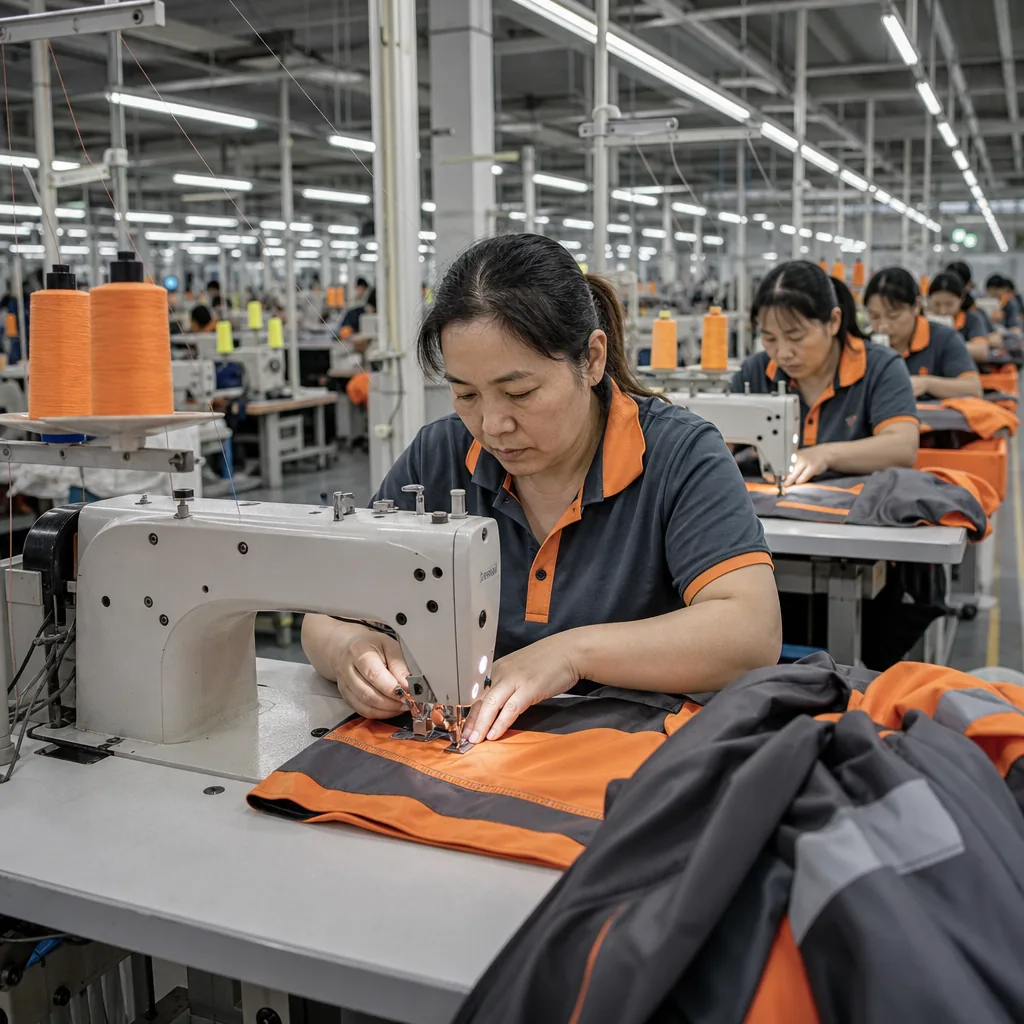
What each decoration method does best
Embroidery stitches a logo or design directly into the fabric with thread. It creates a textured, premium look and is widely used on polos, jackets, caps, fleeces, and other thicker garments. Screen printing pushes ink through a mesh stencil onto the fabric. It is usually better for larger graphics, flatter decoration areas, and higher-volume orders where a lighter hand feel matters.
In custom workwear, the best choice is not only about appearance. You also need to consider the base fabric, how often the item will be laundered, whether the garment is waterproof or stretch-based, and how much detail the artwork contains. A clean method fit matters more than following a trend.
Durability and wash performance
For garments that see heavy daily wear, embroidery often holds up very well because the design is made from thread rather than a printed surface that can crack over time. That said, embroidery is not automatically the best answer for every item. Very thin fabrics can pucker, and a dense stitched logo can feel stiff if it is too large or placed on a flexible panel.
- Embroidery is usually a strong choice for outerwear, knit polos, sweatshirts, and caps where the fabric can support stitching.
- Screen printing is durable when the ink system is matched to the fabric and cured correctly, but the print can age differently depending on wash care and garment type.
- On coated, waterproof, or highly technical fabrics, decoration needs extra care; some garments perform better with limited decoration or alternative methods such as heat transfer, depending on the material.
Cost, setup, and order size
Screen printing often becomes more economical as order size rises because the setup cost is spread across more units. Each color generally adds complexity, so simple artwork is usually more efficient than multi-color designs. Embroidery commonly involves digitizing the logo and programming the stitch file, after which the per-piece cost depends on stitch count, size, and placement.
A useful rule is that screen printing tends to suit larger runs of simpler artwork, while embroidery is often preferred for smaller-to-medium quantities, premium uniforms, and pieces where a more elevated look matters. Neither method is universally cheaper; the best value depends on logo size, number of colors, garment type, and production quantity.
Fabric compatibility and logo detail
Fabric choice can decide the decoration method before price does. Embroidery works well on stable fabrics like pique polos, fleece, denim, and structured woven uniforms. It is less ideal for very lightweight, stretchy, or delicate materials because the stitch density can distort the fabric. Screen printing is more flexible for finer detail and broader artwork, but it needs a smooth enough surface to produce sharp edges.
| Need | Usually better fit | Why |
|---|---|---|
| Small chest logo on polo | Embroidery | Looks professional and wears well on stable knit fabrics |
| Large back graphic | Screen printing | More suitable for bigger artwork and lighter hand feel |
| Fine detail or thin lines | Screen printing | Better for crisp artwork when the garment surface is appropriate |
| Premium outerwear branding | Embroidery | Adds dimension and a durable retail-style finish |
| Very lightweight or stretchy fabric | Depends on garment | Decoration must be matched carefully to avoid distortion |
Appearance, comfort, and branding impact
Embroidery usually communicates a more formal, premium impression. It is common in hospitality, corporate apparel, trade uniforms, and outerwear where the logo needs to look structured and durable. Screen printing can feel softer and more casual, especially on T-shirts and lightweight tops, and it often works better when the artwork is large or colorful.
Comfort matters on workwear because staff wear these garments for long shifts. A large stitched logo may feel heavier than ink on the fabric, while a printed design may be more flexible and less noticeable to the wearer. If the uniform must balance branding with all-day comfort, ask for sample placements before approving production.
When to choose one method over the other
- Choose embroidery for polos, jackets, caps, fleece, and uniforms that need a premium, long-lasting logo.
- Choose screen printing for larger graphic areas, simpler logos, and cost-efficient decoration on bigger runs.
- Check the garment fabric first: stable fabrics tolerate stitching better, while smooth flat knits often print well.
- Match the design to the method: detailed artwork may need printing, while a clean compact logo may be ideal for embroidery.
- Request a production sample or strike-off when the garment is expensive, technical, or being ordered at scale.
Practical buying checklist
Before you approve decoration, confirm the garment material, logo size, color count, placement, and expected wash cycle. Ask how the supplier will prepare the artwork and whether the decoration method is suitable for the specific fabric. If the workwear includes waterproof membranes, stretch zones, or hi-vis materials, decoration should be reviewed carefully to avoid performance issues.
- What fabric is the garment made from?
- How large is the logo, and how much detail does it contain?
- How many colors are in the artwork?
- Will the item be washed frequently or exposed to harsh conditions?
- Does the decoration need a premium look, a soft hand feel, or maximum cost efficiency?
Need help choosing the right decoration method?
Send your garment type, logo artwork, and order quantity, and we can recommend the most suitable decoration method for your workwear project.
Request a quote →