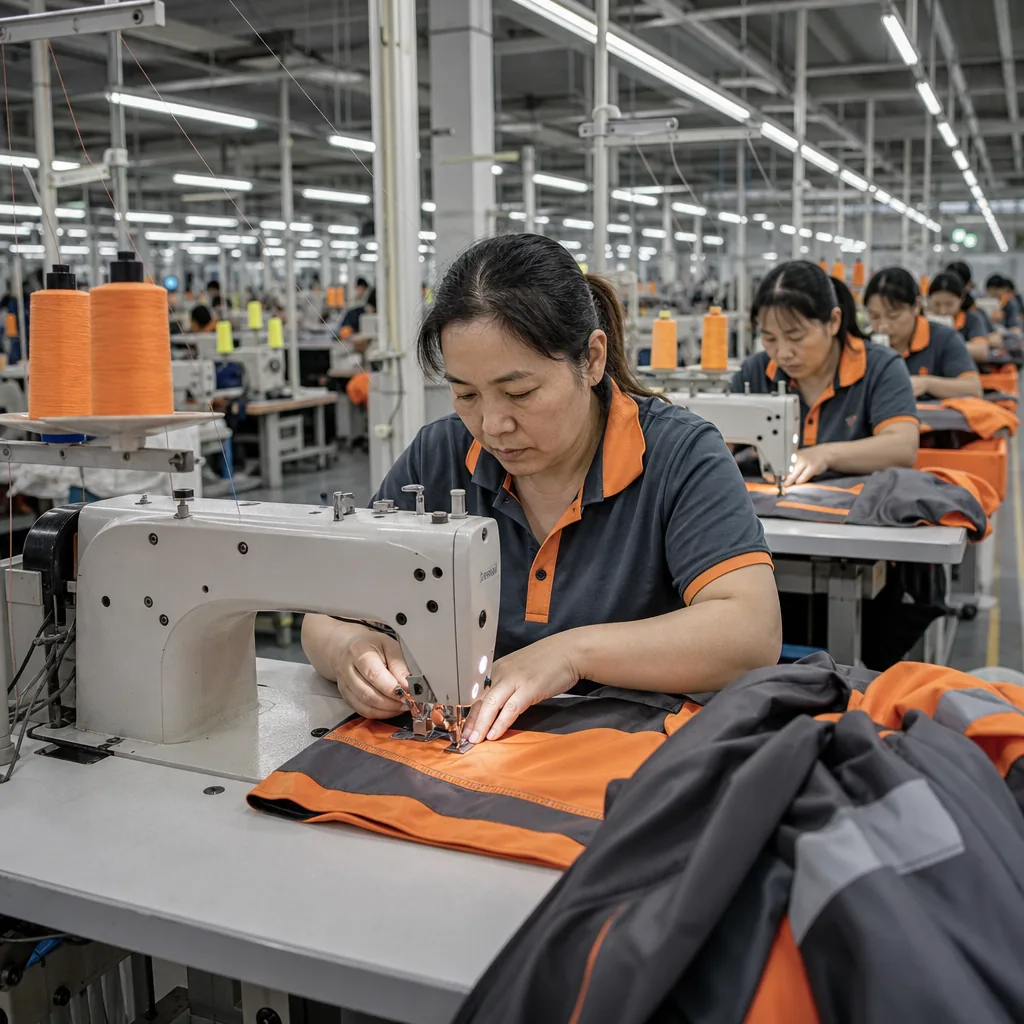
What EN 343 Actually Covers
EN 343 is the European standard for protective clothing that protects against rain. The current version is EN 343:2019, commonly referenced as EN 343:2019 Protective clothing - Protection against rain. It assesses resistance to water penetration and resistance to water vapour, which buyers usually discuss as waterproofness and breathability. The standard is used for jackets, trousers, coveralls, and rain shells worn by construction crews, logistics teams, utilities, security staff, maintenance workers, and other outdoor staff. A common sourcing mistake is treating EN 343 as a fabric-only requirement. Fabric performance matters, but the finished garment must be built so water does not enter through seams, closures, pockets, hoods, hems, or decoration points. A laminate can pass material testing while the garment still performs poorly because of unsealed needle holes, exposed zippers, badly placed branding, or a hood that does not cover the collar opening. Buyers should therefore specify the target EN 343 classes at garment concept stage, not after the design, trims, and logo positions are already fixed.
Understanding EN 343 Classes
- Water penetration resistance: EN 343:2019 uses classes 1 to 4 for resistance to water penetration, with Class 4 the highest. This is the first key performance figure buyers usually check when comparing rainwear.
- Water vapour resistance: Breathability is also classified from 1 to 4, with Class 4 representing the best water vapour performance under the standard. This matters for active workers because trapped sweat can make a garment feel wet from the inside.
- Optional finished-garment rain tower test: The marking may include an optional rain tower assessment on the ready-made garment, often shown with R when tested. It is useful for higher-risk outdoor roles because it checks more than flat fabric performance.
- Separate standards: EN 343 does not replace high-visibility, flame-resistant, chemical, or antistatic standards. If those protections are needed, specify them separately, such as EN ISO 20471 for high-visibility clothing.
Choose Fabric Around the Job
Most EN 343 waterproof workwear is made from coated or laminated fabrics. PU-coated polyester is common for cost-sensitive rainwear and can provide practical water resistance, although heavy coatings may reduce comfort. Laminates using PU or TPU membranes on polyester or nylon can improve breathability and hand feel. Three-layer laminates place the membrane between the face fabric and an inner backing, improving durability for demanding field use where garments rub against tools, vehicles, harnesses, or rough surfaces. Do not compare fabric only by composition. Ask for test reports that identify the tested material, colour, coating or membrane, weight, and finish. Review water penetration resistance, water vapour resistance, tear strength, tensile strength, abrasion resistance, dimensional stability after washing, and colour fastness. For custom workwear, also confirm whether the outer fabric can accept the required colour, reflective trim, print method, or heat transfer without damaging the waterproof layer. A fabric that performs well in black may not automatically have identical reports for a special corporate colour or a different coating batch.
Control Seams, Closures, Fit, and Branding
The weakest points in waterproof workwear are usually construction details. Standard stitched seams create needle holes, so waterproof garments normally need seam sealing tape on the inside. Seam tape width, adhesive type, bonding temperature, pressure, and dwell time must match the fabric and the factory's equipment. Specify taped seams at shoulders, sleeve joins, side seams, crotch, seat, and other zones exposed to rain pressure. Use storm flaps, zipper garages, welted pockets, waterproof zippers, protected pocket entries, adjustable hoods, secure cuffs, and hem drawcords where appropriate. Fit is also a performance issue. A rain jacket worn over fleece or a uniform shirt needs enough ease across the chest, shoulders, and arms. Trousers need room at the knee and seat when workers kneel, climb, cycle, or enter vehicles. Customization needs the same discipline. Embroidery creates needle holes and can damage the waterproof barrier unless it is applied to a patch before sealing, placed in a low-risk zone, or supported by a construction method agreed during sampling. Screen printing and heat transfer can work well, but temperature, pressure, adhesive chemistry, film stretch, and wash durability must be compatible with the shell fabric and membrane. Compare logo branding options before locking the technical pack.
Balance Waterproofness, Breathability, and Testing
Waterproofness and breathability are linked, but they are not the same requirement. A very heavy coating may resist rain well while trapping heat and perspiration. For delivery teams, rail maintenance crews, warehouse loading yards, road workers, and outdoor construction, discomfort can lead workers to unzip jackets or stop wearing them. That turns breathability into a procurement and compliance issue, not just a comfort preference. Start with the use case. Are workers standing in prolonged rain, walking delivery routes, lifting goods, cycling, climbing scaffolds, directing traffic, or working near machinery? Active roles often justify higher breathability, lighter fabrics, and ventilation features such as underarm vents, breathable membranes, mesh pocket bags, or back vents protected from rain. Lower-activity roles may prioritise stronger waterproofness, heavier fabric, simpler construction, and durability against abrasion. For a serious workwear program, request reports from recognized third-party laboratories or accredited testing facilities. Each report should identify the tested sample, test standard, test date, test method, performance class, and sample description. If the finished garment rain tower test is required, make that clear before sampling because it may affect design decisions.
Write a Testable OEM Tech Pack
- State EN 343:2019 and the target class for water penetration resistance and water vapour resistance.
- Define garment type, intended user role, climate, layering needs, size range, fit intent, and expected wear conditions.
- List approved shell fabric, coating or membrane type, lining, seam tape, zippers, snaps, cord adjusters, reflective trim, and other trims.
- Mark every taped seam, pocket entry, ventilation feature, hood detail, cuff closure, hem finish, and decoration position on the technical sketch.
- Specify care instructions, wash expectations, industrial laundry limits if applicable, and any claim that must remain valid after laundering.
- Request pre-production samples made with final fabric, trims, seam sealing, branding, and packaging assumptions.
- Keep test reports linked to the correct material, colour, coating, finish, and garment construction rather than a generic fabric family.
- Separate compliance documents from quality control records, then inspect seam tape adhesion, stitch quality, measurements, shade consistency, zipper function, trim placement, label content, packing, and carton marks. For inspection planning, see AQL inspection for uniforms.
Build an EN 343-ready rainwear spec
Share your target performance class, garment type, colours, size range, and branding requirements. We can help turn the brief into samples, test-ready specifications, and OEM bulk production planning.
Request a quote →