What EN 343 covers
EN 343 is a European standard for protective clothing against rain. It applies to garments intended to protect against precipitation such as rain and snow, fog, and humidity from the ground. In B2B sourcing, it is commonly relevant to shell jackets, overtrousers, bib pants, and coveralls used in construction, transport, utilities, warehousing yards, municipal service, and similar outdoor work.
The standard evaluates two main performance areas: resistance to water penetration and resistance to water vapour. In plain terms, buyers should think of these as rain protection and moisture-management comfort. That is why EN 343 waterproof workwear should never be assessed on waterproofness alone. A garment that blocks rain but traps perspiration may still be unsuitable for workers with high movement levels or long shifts.
How classification works
Under the current standard, garments are marked with two classes shown beside the EN 343 pictogram. The first number relates to resistance to water penetration, and the second relates to resistance to water vapour resistance or, in some cases, evaporative resistance. Higher classes generally indicate stronger performance, but buyers still need to match the result to the job, climate, and layering system.
| Performance area | Typical buyer question | Why it matters in production |
|---|---|---|
| Resistance to water penetration | How well does the garment prevent water ingress? | Depends on fabric, membrane or coating, seam sealing, closures, and pattern construction |
| Resistance to water vapour / evaporative resistance | Will the wearer overheat or feel clammy? | Affected by material system, lining, ventilation, and activity level |
| Whole-garment execution | Does bulk production preserve tested performance? | Seam tape application, hood design, cuffs, plackets, pockets, and QC are critical |
A key sourcing point is that a strong waterproof fabric does not automatically make a strong rain jacket. EN 343 performance in use depends on the finished garment, not only on a swatch. If a supplier cannot clearly explain how taped seams, zippers, storm flaps, hood openings, and hem adjustments support the claimed class, the technical file is incomplete.
Testing and marking: what buyers should know
The version most buyers now reference is EN 343:2019, adopted in the EU as EN 343:2019+A1:2021. The standard includes testing for water penetration and water-vapour-related performance, plus requirements for marking and user information. Procurement teams should verify that reports and declarations refer to the same edition required by the target market, especially when comparing legacy products to newer developments.
The standard also includes an optional R marking for rain tower testing on the finished garment. When present, it indicates the garment has been tested in a simulated rainfall condition as specified by the standard. This can be useful for outerwear programs where seam construction and closure design are major concerns, because it adds a whole-garment check beyond material-level data.
- Ask for the exact EN 343 edition shown on the test report or declaration
- Confirm whether the result is based on the finished garment, the material, or both
- Check whether optional rain tower testing is included and whether the R marking applies
- Review user-information documents, not only hangtag claims or sales sheets
Where buyers often get confused
EN 343 is not a universal proof of all-weather protection. It does not replace standards for high visibility, flame resistance, arc protection, chemical protection, or cold protection. If a rain jacket also needs conspicuity, for example, buyers may also need EN ISO 20471 resources and compatible trim planning. Multi-norm garments are more complex because every added requirement can affect fabric choice, seam construction, trim availability, and testing strategy.
Another common confusion is treating water resistance claims on softshell or coated fashion outerwear as equivalent to EN 343 certification. Many softshells can handle light showers, but that does not mean they meet EN 343 requirements. In RFQs and sample approvals, specify whether you need certified protective rainwear or simply weather-resistant outerwear. That distinction avoids disputes later.
Why garment construction decides real-world performance
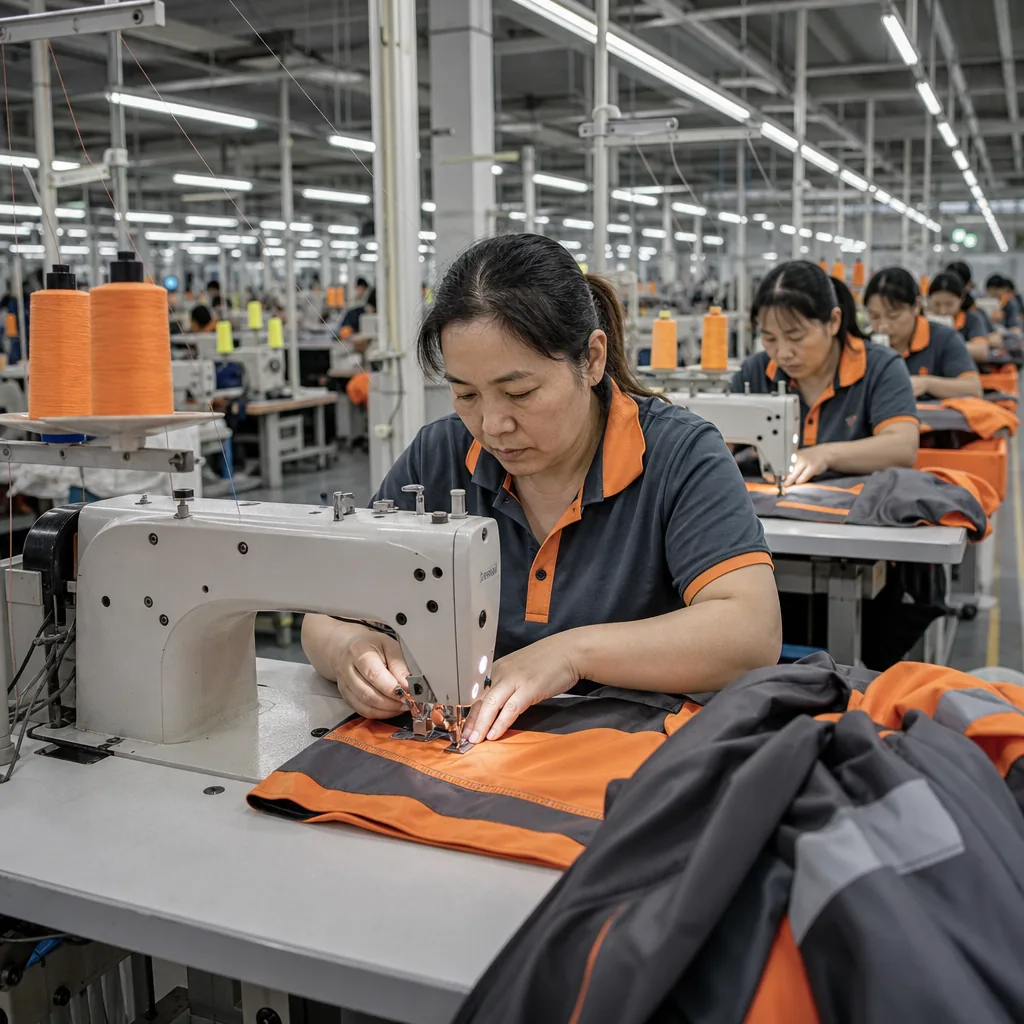
In factory practice, rainwear failures often come from execution rather than headline fabric specification. Seam tape compatibility, taping temperature and pressure, stitch density, needle damage risk, zipper shielding, pocket opening design, and hood adjustment all affect leakage risk. A membrane or coated fabric can perform well in the lab yet fail in wear if seam application is inconsistent or if decoration punctures the shell in exposed zones.
- Use seam tape matched to the coating or membrane system
- Prioritize taped integrity at shoulders, hood seams, armholes, crotch seams, and major exposure points
- Review plackets, cuffs, hems, and hood openings for wind-driven rain entry
- Align ventilation and lining choices with worker activity and climate
- Assess whether embroidery, patches, or heat-applied branding could compromise waterproof areas
This is why experienced buyers request sealed-seam pre-production samples, not only fabric approvals. A capable OEM clothing manufacturer should be able to explain construction trade-offs early, especially when custom branding or reflective layouts intersect with waterproof panels.
Supplier questions that reduce compliance risk
A compliant-looking label is not enough for B2B purchasing. Teams should review the technical evidence behind the claim and make sure the approved sample matches the intended bulk bill of materials and process route.
- Which EN 343 edition is the product tested to?
- What are the declared classes for water penetration and water vapour or evaporative resistance?
- Does documentation cover the finished garment, the fabric, or both?
- What shell system is used: coating, laminate, or membrane construction?
- Which seams are taped, and is the seam-tape specification locked in the BOM?
- How are front closures, pockets, and vents protected from water ingress?
- Will branding or decoration alter shell integrity or require restricted placement?
- What in-line and final QC checks verify seam-tape adhesion and waterproof construction consistency?
How to write a stronger EN 343 brief
The best sourcing results come from translating field conditions into a realistic specification. Start with actual exposure: constant rain, intermittent showers, cold wind, long vehicle entry-exit cycles, or physically demanding movement. Then define garment type, underlayers, expected service life, care routine, branding method, and whether certification is required on the finished garment. That gives the factory enough information to recommend the right material system instead of defaulting to the lowest-cost coated option.
- Define weather exposure, shift length, and worker activity level
- State whether EN 343 certification is mandatory for the finished garment
- List functional features such as hood type, cuff adjustment, storm flap, vents, and reflective trim
- Control decoration placement through the tech pack and approval sample
- Require sealed-seam sample approval before bulk cutting
- Include QC checkpoints for tape appearance, adhesion, and closure construction
When comparing quotations, keep the specification basis consistent. Fabric composition, coating or laminate type, seam-tape grade, zipper construction, and inspection expectations should all be aligned. Otherwise, lower prices may simply reflect weaker build details. For broader sourcing context, see wholesale uniforms, logo branding methods, and related articles in Certifications.
Need help sourcing compliant rainwear?
Send your target market, end use, and garment brief, and we can review materials, seam-sealing requirements, decoration constraints, and factory feasibility for custom EN 343 programs.
Request a quote →Bottom line for procurement teams
EN 343 gives buyers a practical framework for assessing occupational rainwear, but it works best when the standard is tied to real use conditions and verified through development control. The safest approach is to evaluate the material system, finished-garment construction, and production QC together. For private-label projects, that means choosing suppliers who understand not only compliance language, but also how pattern engineering, seam sealing, and branding decisions affect performance once the garment is worn in the rain.